
CICA series | Chapter 1: CICA — A Multilateral Platform of Confidence in an Era of Geopolitical Volatility
Author: Teejuta Petasen
Illustrator: Phim-on Lohakit
What is CICA?
CICA (Conference on Interaction and Confidence Building Measures in Asia) is a multilateral forum whose primary purpose is to develop Confidence Building Measures (CBMs) to prevent conflict and strengthen stability across Asia. It advances regular dialogue, policy transparency, and multi-dimensional cooperation, spanning political-security, economic, human, environmental, and new and emerging threats. The forum comprises 28 member states, covering much of the Asian continent. CICA originated from a proposal by President Nursultan Nazarbayev to the United Nations General Assembly (47th session) on 5 October 1992, with the aim of laying the groundwork for a cooperative security architecture in which Asian states can help shape regional security directions for themselves. This marked the beginning of CICA as a mechanism to sustain peace and stability in the region.
CICA’s institutional development was consolidated through the adoption of the Declaration on the Principles Guiding Relations among the CICA Member States at the First Meeting of the Foreign Ministers on 14 September 1999 in Almaty, Kazakhstan. The Declaration sets out fundamental principles including respect for sovereignty, non-interference in internal affairs, and the peaceful settlement of disputes. Subsequently, the First CICA Summit on 4 June 2002 adopted the Almaty Act as the core charter defining the organization’s vision, objectives, and mission framework. Together, these two documents serve as key pillars of CICA’s cooperative security architecture.
At its core, CICA promotes peace, security, and stability in Asia through CBMs across five principal dimensions: economic, environmental, human, political-military, and new challenges and threats. By reducing suspicion among member states, strengthening transparency, and encouraging preventive cooperation before crises emerge, CICA reflects the view that Asian security cannot rely solely on power balancing; it must be supported by development, connectivity, and mutual confidence among states, guiding the region toward becoming a genuine “community of cooperation.”
Thailand’s Role in CICA
Thailand has been a CICA member since 2004 and has played an active role in advancing cooperation, particularly by integrating sustainable development into the broader security agenda. At the Fifth CICA Meeting of Foreign Ministers in Beijing in April 2016, Mr. Don Pramudwinai, Thailand’s Minister of Foreign Affairs, reaffirmed Thailand’s position in promoting sustainable development in tandem with regional stability and expressed Thailand’s readiness to work with member states toward achieving the Sustainable Development Goals (SDGs).
In practical terms, Thailand serves as a lead coordinator in the dimension of sustainable development by sharing the Sufficiency Economy Philosophy (SEP) as a grassroots-based approach to building resilience and security. Thailand has also organized training and knowledge exchanges for member states on a continuing basis. For example, the course “Sufficiency Economy Philosophy: Tool for Sustainable Rural Development” held in 2017 in Chiang Mai, Thailand. Moreover, in 2023, the Ministry of Foreign Affairs appointed the Institute of Asian Studies, Chulalongkorn University as Thailand’s representative in the CICA Think Tank Forum. This included participation in the 12th CICA Think Tank Forum in Shanghai, China in 2024, and the 13th forum in Baku, Azerbaijan in 2025. Thailand has also proposed that Thai universities join the CICA Partnership Network of Leading Universities (CICA PNLU) to broaden academic and research cooperation – reflecting Thailand’s tangible role in advancing development and security concurrently within the CICA framework.
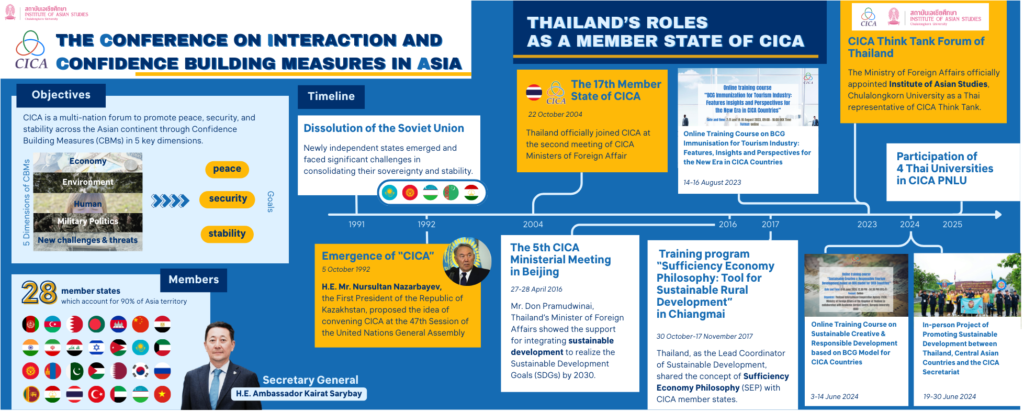
Image 1 Infographic about CICA and timeline
Middle Corridor: A Strategic Eurasian Link amid Geopolitical Volatility
CICA has promoted the “Middle Corridor,”the Trans-Caspian International Transport Route (TITR), as an alternative logistics corridor connecting trade between China–Central Asia–the Caucasus–Europe. This has gained momentum amid geopolitical instability following the Crimea crisis in 2014 and the Russia-Ukraine war in 2022, which increased risks along northern routes passing through Russia. The Middle Corridor has therefore been elevated as a mechanism for risk diversification in Asia-Europe trade and aligns with infrastructure investment under the Belt and Road Initiative (BRI), which advances “intercontinental connectivity” as a key regional strategy.
Structurally, the Middle Corridor can reduce transit time to roughly 15-25 days, compared with maritime shipping via the Suez Canal, which generally takes longer. Accordingly, the corridor is not merely a transport route, but a “critical puzzle piece” linking East Asia to Europe via China and Kazakhstan, across the Caspian Sea to Azerbaijan, then onward to Georgia and Türkiye before entering Europe. For Thailand, this corridor offers strategic opportunities to connect ASEAN rail networks through China to wider Eurasian routes, expand agricultural and industrial exports to Central Asia and Eastern Europe, and strengthen Thailand’s role as a Southeast Asian logistics hub, within a CICA framework that increasingly intertwines security with geo-economic dynamics.
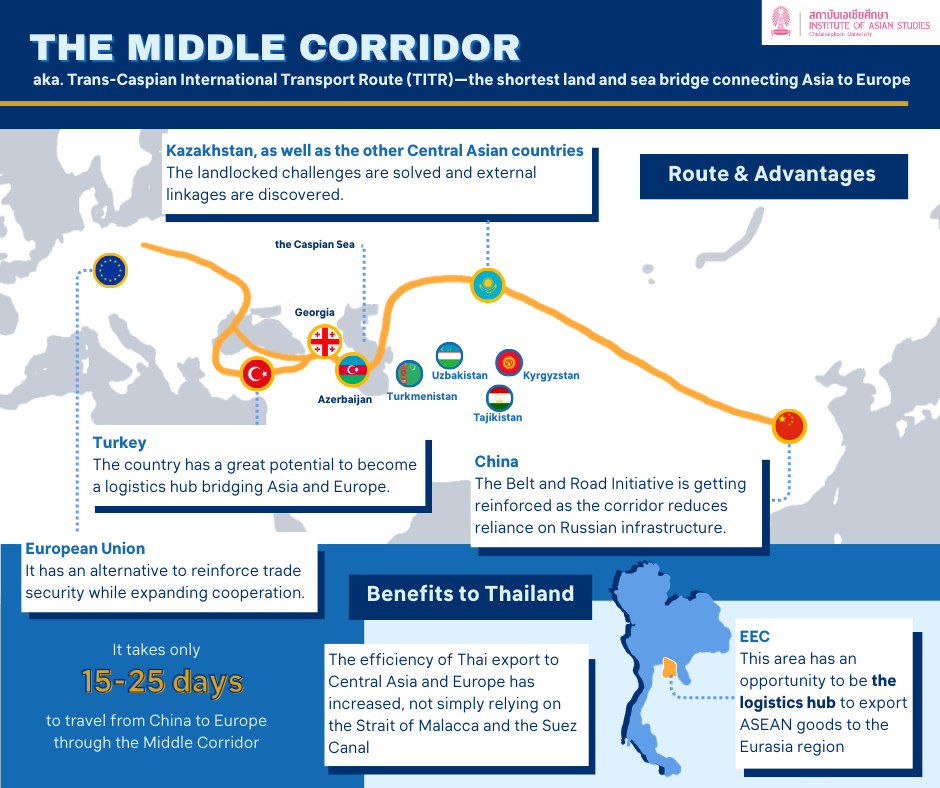
Image 2 The Middle Corridor route and its advantages
CICA and Middle Power Diplomacy
Moreover, by linking security with geo-economics through the Middle Corridor and its connections to the Belt and Road Initiative, CICA has become a platform where middle powers can increasingly shape regional agendas. For Thailand, leveraging CICA to expand its academic, economic, and network-based diplomacy reflects a gradual shift from “policy taker” to “agenda shaper” in selected domains. In this sense, CICA is not merely a security forum but a mechanism through which Thailand can experiment with and elevate its role as a middle power within an Asian order undergoing continuous recalibration.
Viewed through the lens of Middle Power Diplomacy, CICA provides institutional space for medium-sized states such as Thailand to pursue an “influence through institutions” strategy rather than direct power competition. In the context of an evolving Asian order characterized by a multiplex structure, CICA enables Thailand to act as a coordinator and bridge-builder between Southeast Asia, Central Asia, and the wider Eurasian region without being compelled to align exclusively with any major power. Thailand’s engagement in CICA—particularly in the domain of sustainable development—illustrates a strategy of constructive hedging, whereby multilateral institutions are utilized to maintain strategic equilibrium amid great-power rivalry.
Reference
Thai language
กระทรวงการต่างประเทศ. (26 พฤศจิกายน 2565). ประเทศไทยเป็นผู้ประสานงานด้านการพัฒนาอย่างยั่งยืนของการประชุมว่าด้วยการส่งเสริมปฏิสัมพันธ์และมาตรการสร้างความไว้เนื้อเชื่อใจระหว่างประเทศในภูมิภาคเอเชีย (CICA). เรียกใช้เมื่อ 3 กุมภาพันธ์ 2569 จาก https://www.mfa.go.th/th/content/5d5bd0c015e39c3060021043?cate=5d5bcb4e15e39c306000683d
กระทรวงการต่างประเทศ. (29 เมษายน 2567). ผู้ช่วยรัฐมนตรีประจำกระทรวงการต่างประเทศพบหารือเลขาธิการ CICA. เรียกใช้เมื่อ 3 กุมภาพันธ์ 2569 จาก https://www.mfa.go.th/th/content/cia22april?page=5d5bd3cc15e39c306002a9e9&menu=5d5bd3cc15e39c306002a9ea
English language
CICA Conference on Interaction and Confidence Building Measures in Asia. (n.d.). CICA. Retrieved February 3, 2026, from https://www.s-cica.org/index.php?view=page&t=about
Gunaseelan, O. P. (2025, November 3). Thailand and CICA: Advancing Peace, Stability and Prosperity through Confidence-Building Measures. Retrieved February 4, 2026, from International Studies Center: https://isc.mfa.go.th/en/content/thailand-and-cica-cbm
Institute of Asian Studies. (n.d.). Chulalongkorn University’s Institute of Asian Studies Joins the 13th CICA Think Tank Forum in Baku. Retrieved February 3, 2026, from http://www.ias.chula.ac.th/en/event/chulalongkorn-universitys-institute-of-asian-studies-joins-the-13th-cica-think-tank-forum-in-baku/
Valansi, K. (2025, June 2). Why the Middle Corridor matters amid a geopolitical resorting. Retrieved February 3, 2026, from Atlantic Council: https://www.atlanticcouncil.org/content-series/ac-turkey-defense-journal/why-the-middle-corridor-matters-amid-a-geopolitical-resorting/